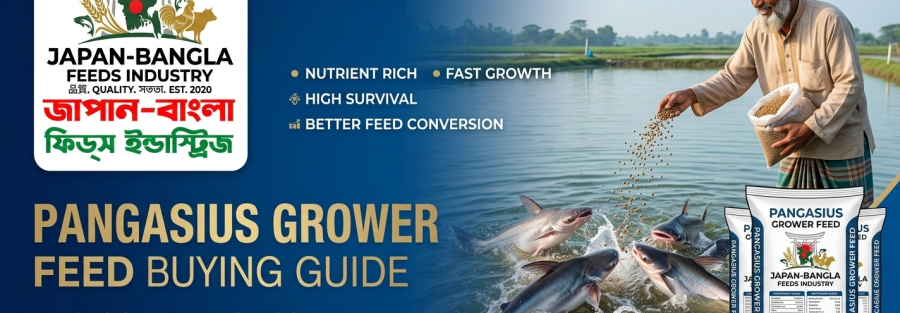
Pangasius farming has become one of the most popular and profitable aquaculture activities in Bangladesh. Known locally as Pangas or Thai Pangas, this fast-growing catfish provides affordable protein to millions and offers good income for farmers. However, success depends heavily on proper nutrition, especially during the grower stage when fish build most of their body weight.
This comprehensive Pangasius grower feed buying guide explains everything you need to know. It covers nutritional needs, what to look for when purchasing, common mistakes, and why Japan-Bangla Feeds Ind. Ltd. stands out as a trusted partner for Bangladeshi farmers. Whether you manage a small pond or a large commercial farm, the right feed can dramatically improve growth rates, reduce costs, and boost overall profits.
Why Pangasius Farming Thrives in Bangladesh
Bangladesh’s warm climate, abundant water resources, and growing domestic demand make it ideal for Pangasius culture. Farmers often stock fingerlings at densities of 20,000 to 30,000 per hectare and aim for harvests of 10-15 tons per hectare per cycle with good management.
Feed accounts for 60-70% of total production costs. Choosing high-quality Pangasius grower feed helps achieve better Feed Conversion Ratio (FCR) – typically 1.5-2.0 with premium pellets versus higher ratios with homemade mixes. Lower FCR means less feed wasted and more money in your pocket.
Japan-Bangla Feeds Ind. Ltd. understands these local realities. With Japanese-influenced technology adapted to Bangladeshi conditions, their feeds support consistent results across different pond types and seasons.
Understanding Nutritional Needs for Pangasius Grower Stage
Pangasius are omnivorous bottom feeders with moderate protein requirements compared to other carnivorous fish. For the grower phase (roughly 150g+ fish), optimal feeds provide:
- Crude Protein: 26-32% – Enough for muscle development without excess cost.
- Lipids/Fats: 5-8% for energy and health.
- Carbohydrates: From sources like maize, rice bran, and wheat for affordable energy.
- Vitamins and Minerals: Essential for immunity, bone strength, and disease resistance.
- Other Additives: Probiotics or growth promoters in quality formulas to improve digestion and pond health.
Grower pellets are usually 3-4mm in size. Sinking feeds work best for Pangasius as they reach the bottom where fish feed naturally. Floating options can supplement but may not suit all setups.
Japan-Bangla Feeds Ind. Ltd. formulates their Pangasius grower feed with balanced plant-based ingredients like soybean meal, rice bran, and limited high-quality fishmeal. This ensures excellent water stability, minimal waste, and strong growth. Farmers report faster weight gain and healthier stocks when using their products.
Key Factors to Consider When Buying Pangasius Grower Feed
- Protein Quality and Balance Look beyond the percentage. Quality sources matter. Cheap feeds with poor ingredients lead to slow growth or health issues. Japan-Bangla Feeds uses carefully selected raw materials for superior digestibility and nutrient absorption.
- Pellet Type and Size Match pellet size to fish growth stage. For growers, 3mm sinking pellets are ideal. Check stability – good pellets hold shape in water for hours, reducing pollution.
- FCR and Performance Guarantees Reputable suppliers like Japan-Bangla Feeds Ind. Ltd. focus on low FCR. Their grower feeds support efficient conversion, often delivering strong results with proper management.
- Storage and Shelf Life Buy from reliable sources with fresh stock. Store in cool, dry places. Premium feeds from Japan-Bangla come in sturdy 25kg bags that maintain quality.
- Price vs. Value While premium Pangasius grower feed costs more upfront, it saves money through better growth and lower mortality. Calculate total cost per kg of fish produced, not just bag price.
- Manufacturer Reputation Choose companies with modern facilities, quality control, and farmer support. Japan-Bangla Feeds Ind. Ltd. combines advanced technology with local expertise, making them a top choice across Bangladesh.
Avoid unbranded or very cheap options, as they often cause uneven growth and higher disease risk.
Best Practices for Feeding Pangasius with Quality Grower Feed
- Feeding Rate: 2-5% of body weight daily for grower fish, split into 2-3 meals. Adjust based on water temperature and fish response.
- Observation: Watch feeding behavior. Remove uneaten feed to maintain water quality.
- Pond Management: Combine commercial feed with natural productivity from fertilized ponds. Regular water exchange and aeration help.
- Growth Monitoring: Sample fish periodically to adjust feeding and track progress.
- Health Focus: Quality nutrition builds immunity. Japan-Bangla Feeds contribute to lower mortality and robust fish.
Many farmers achieve excellent results by trusting Japan-Bangla Feeds Ind. Ltd. for consistent supply and technical advice. Contact Japan-Bangla Feeds Ind. Ltd. today for personalized recommendations.
Benefits of Choosing Japan-Bangla Feeds Ind. Ltd. for Pangasius Grower Feed
Japan-Bangla Feeds Ind. Ltd. has built a strong reputation by prioritizing quality, innovation, and farmer success. Their Pangasius-specific grower feeds offer:
- Scientifically balanced nutrition for rapid, uniform growth.
- High standards inspired by Japanese precision, adapted for Bangladesh.
- Excellent FCR and water stability to keep ponds cleaner.
- Reliable nationwide distribution through authorized dealers.
- Support services including feeding guidance and pond management tips.
Thousands of farmers report higher yields and profits after switching. Whether for mono-culture or poly-culture with tilapia or carp, their feeds deliver results.
For more on their full range, explore sinking and floating options designed specifically for Pangasius and other species.
Common Mistakes to Avoid in Pangasius Feed Management
- Overfeeding or underfeeding – Both waste money and harm water quality.
- Using mismatched pellet sizes.
- Ignoring storage – Moisture ruins nutrition.
- Relying solely on cheap homemade feeds without balancing nutrients.
- Neglecting water quality alongside feed.
Sticking with a proven supplier like Japan-Bangla Feeds minimizes these risks.
Economic Advantages and Future Outlook
With rising demand for fish in Bangladesh and export potential, efficient Pangasius farming is key. Quality grower feed directly impacts profitability. Farmers using premium options from Japan-Bangla often see better market prices due to superior fish health and fillet quality.
The industry continues to evolve with better formulations and sustainable practices. Partnering with forward-thinking companies ensures you stay ahead.