Fish farming plays a vital role in Bangladesh’s economy and food security. With thousands of ponds, rivers, and wetlands, aquaculture supports millions of families. Among various innovations, floating feed for fish farming has transformed how farmers feed their stock. Japan-Bangla Feeds Ind. Ltd. stands at the forefront, offering reliable, high-performance floating fish feed designed specifically for local conditions.
What Is Floating Feed for Fish Farming?
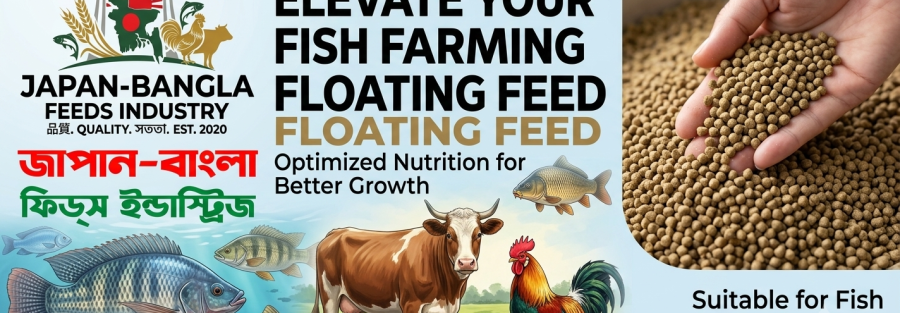
Floating feed consists of specially processed pellets that stay on the water surface for extended periods. Unlike traditional sinking feeds, these pellets do not dissolve quickly or sink to the bottom. Manufacturers like Japan-Bangla Feeds Ind. Ltd. use advanced extrusion technology to create buoyant, nutrient-rich pellets that fish can easily access.
The production process involves mixing quality ingredients such as fish meal, soybean, rice bran, vitamins, and minerals. High-temperature extrusion expands the mix, trapping air that makes the pellets float. This technology ensures better digestibility and water stability, often lasting several hours without breaking down.
Japan-Bangla Feeds Ind. Ltd. maintains strict quality control at their Gazipur factories, blending Japanese precision with Bangladeshi needs. Their floating feeds come in various sizes and formulations for different fish species and growth stages – from nursery to grow-out phases.
Key Benefits of Using Floating Feed in Fish Farming
Farmers switching to floating feed notice immediate improvements. Here are the main advantages:
- Easy Monitoring of Fish Health and Feeding: Pellets float, allowing farmers to observe eating habits directly. You can adjust quantities based on appetite, preventing overfeeding or underfeeding. Japan-Bangla Feeds Ind. Ltd. emphasizes this benefit, helping farmers save money and promote uniform growth across the pond.
- Reduced Feed Waste and Better Water Quality: Sinking feeds often settle in mud, leading to decomposition and poor water conditions. Floating options from Japan-Bangla minimize waste, keeping ponds cleaner and reducing disease risks. Healthier water means lower mortality rates and higher survival.
- Improved Feed Conversion Ratio (FCR): Fish digest floating pellets more efficiently due to better nutrient availability. This leads to faster growth with less feed required per kilogram of fish produced. Many users of Japan-Bangla floating feed report excellent FCR, boosting profitability.
- Nutritional Superiority: These feeds provide balanced proteins, fats, vitamins, and minerals tailored for species like tilapia, carp, pangas, and catfish – common in Bangladesh. Japan-Bangla Feeds Ind. Ltd. formulates products with high digestibility to support strong immunity and rapid weight gain.
- Labor and Time Savings: No need for special feeding trays. Farmers simply broadcast pellets from the pond edge. This simplicity makes floating feed ideal for both small-scale and commercial operations.
- Environmental Sustainability: Less uneaten feed means reduced organic pollution. Japan-Bangla Feeds Ind. Ltd. supports eco-friendly farming practices that align with Bangladesh’s goal of sustainable aquaculture.
Types of Floating Fish Feed Available from Japan-Bangla Feeds
Japan-Bangla Feeds Ind. Ltd. offers a range suited to different farming needs:
- Starter Feeds: Small pellets for fry and fingerlings with higher protein content.
- Grower Feeds: Balanced for juvenile fish promoting steady development.
- Finisher Feeds: Energy-rich options for market-size fish to enhance flesh quality.
- Species-Specific Formulas: Customized for tilapia, carp, or mixed polyculture systems.
All products feature excellent buoyancy, water stability, and palatability. Farmers appreciate the consistent quality that Japan-Bangla delivers batch after batch.
How to Use Floating Feed Effectively in Your Fish Farm
Success depends on proper application:
- Determine Feeding Rate: Base it on fish biomass, water temperature, and growth stage. Start with 3-5% of body weight daily for young fish, reducing as they grow.
- Feeding Schedule: Feed 2-3 times a day at fixed times and locations. Observe response within minutes.
- Storage Tips: Keep bags in a cool, dry place to maintain freshness. Japan-Bangla Feeds uses durable, moisture-resistant packaging.
- Pond Management: Combine with good aeration and water exchange for best results.
- Transition Gradually: When switching from other feeds, mix gradually over a few days.
Japan-Bangla Feeds Ind. Ltd. provides technical guidance to farmers through their dealer network, ensuring optimal results.
Why Choose Japan-Bangla Feeds Ind. Ltd. for Your Floating Feed Needs?
In a competitive market, Japan-Bangla Feeds Ind. Ltd. distinguishes itself through quality, reliability, and farmer focus. With factories in Gazipur and a strong distribution network across Bangladesh, they ensure timely supply even in remote areas.
Their commitment to research-backed formulations incorporates international best practices while addressing local challenges like variable water quality and climate. Farmers partnering with Japan-Bangla report higher yields, healthier fish, and improved incomes.
The company also supports rural development by empowering smallholders. Whether you operate a backyard pond or a large commercial farm, Japan-Bangla floating feed helps scale your success sustainably.